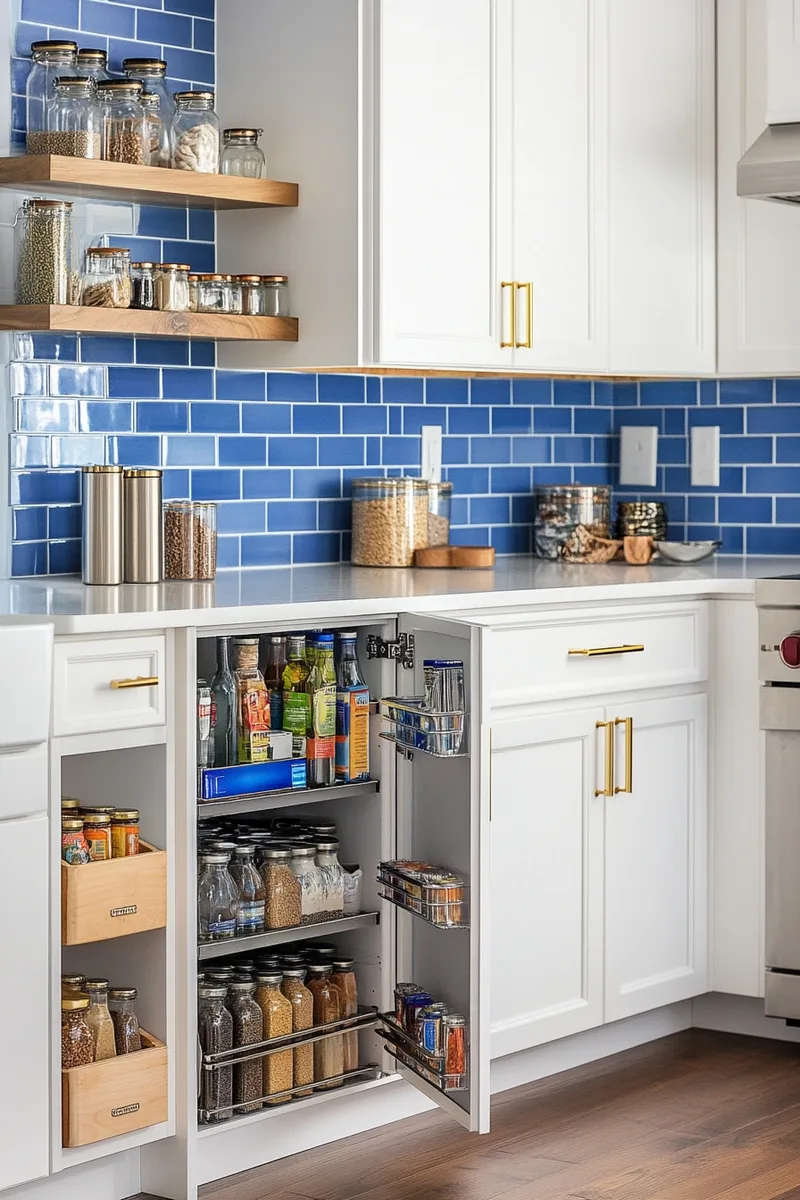
# Let each cabinet support a task
In a compact kitchen, the shortest route matters more than a perfectly matching set of containers. Map storage around four tasks: prep, cook, serve, and clean. Stand where each task happens and move its most-used tools within one step.
## Start with the prep zone
Keep knives, cutting boards, mixing bowls, and everyday seasonings near the clearest work surface. A vertical divider can hold boards and sheet pans without a precarious stack. If drawers are scarce, a small rail can carry lightweight tools while keeping the counter clear.
## Use height deliberately
Cabinet shelves often waste the space above short items. Add a removable shelf riser for mugs or pantry jars. Use the highest shelf for light, occasional pieces rather than heavy appliances. Turntables are helpful in deep corners, but only when every item remains visible.
## Reduce package noise
Decant only foods that benefit from an airtight container or are bought repeatedly. Keep cooking instructions and dates with the food. Matching jars are not a requirement; readable labels and easy access are.
## End with the daily reset
Return five high-use items after dinner, wipe the primary prep surface, and check that tomorrow’s breakfast tools are reachable. Once a month, remove expired ingredients and duplicate utensils.
A good cabinet map feels almost invisible. You stop crossing the room for a colander, lifting six pans for one lid, or losing ingredients in a dark corner. The kitchen becomes easier because storage follows the work.