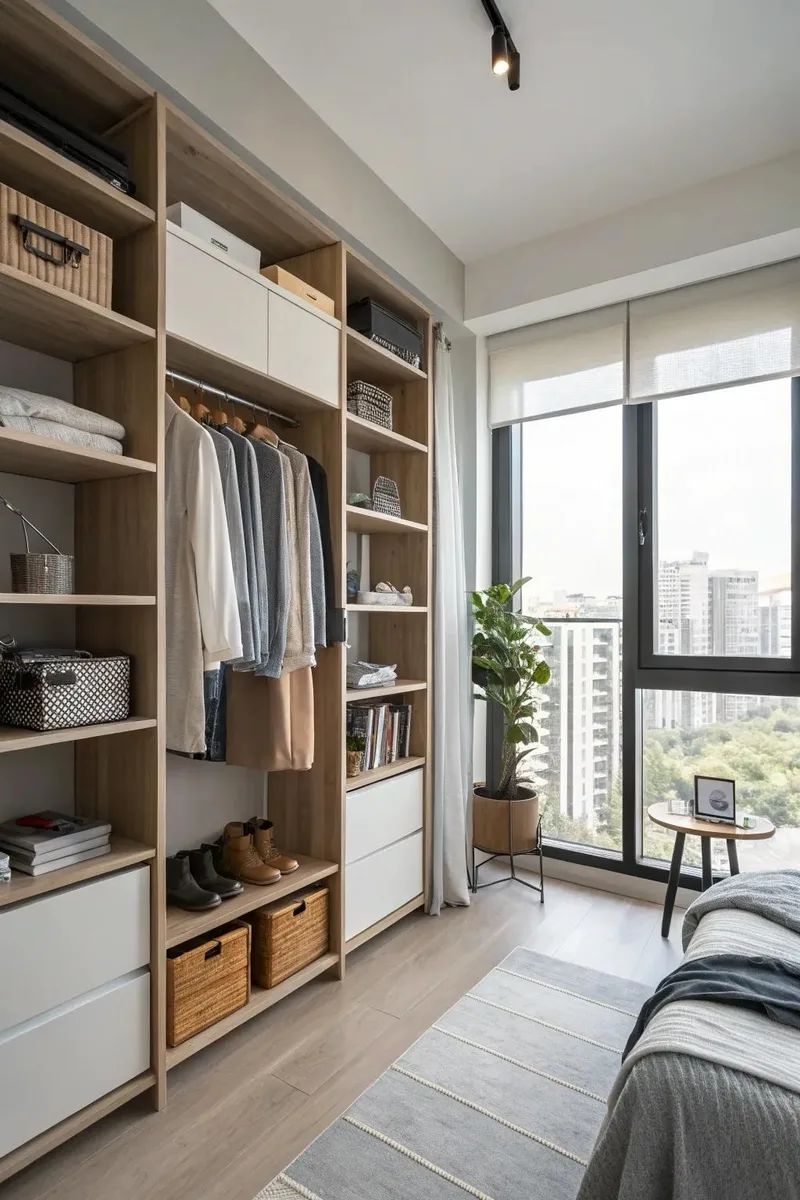
# Vertical storage needs a visual stopping point
Walls can add capacity without taking floor space, but filling every inch creates a different kind of clutter. Choose one vertical storage wall per room and leave neighboring surfaces calmer. The contrast makes the room feel intentional.
## Put frequency at the right height
Daily items belong between shoulder and knee height. Occasional items can sit higher, provided they are light and safely contained. Heavy objects should stay low. Never place unstable decor or breakables above beds and seating.
## Build from narrow components
Picture ledges can hold books face-out. Peg rails handle tools, bags, or kitchen linens. A shallow shelf above a doorway suits labeled archive boxes. On a door back, use soft organizers that will not stop the door from closing or damage hinges.
## Keep categories visually consistent
Open storage looks calmer when containers share one material or color family. That does not require buying a matching set; repeated labels and similar heights create enough order. Leave some shelf space empty so items can be returned without reshuffling everything.
## Test the installation
Use hardware suited to the wall material and the expected load. Follow the manufacturer’s weight guidance. In rentals, choose approved removable systems or ask before drilling.
Vertical storage works when it supports access rather than displaying every item. Start with the most frustrating category, install one narrow solution, and live with it for a week before extending the system.