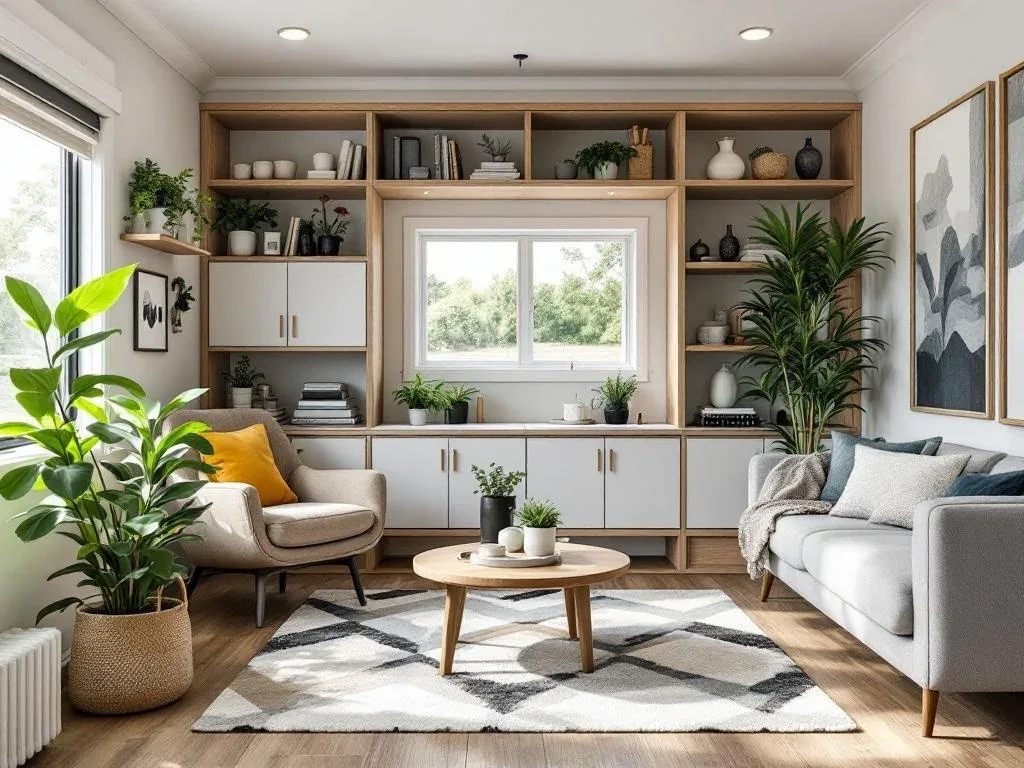
# One useful piece is better than three compromised ones
Double-duty furniture can help a small living room, but only when both functions are easy to use. A storage ottoman that blocks the walkway or a lift-top table that cannot open beside the sofa creates more friction than it removes.
## Measure movement, not just walls
Record the room dimensions, door swings, radiator clearance, and the path between entrances. Mark the proposed footprint with painter’s tape. Then add the space needed to open drawers, lift a lid, or unfold a sleeper. Walk the route while the tape is down.
## Match storage to real objects
Ottomans suit blankets, games, and lightweight exercise gear. Closed media units hide cables and devices. A bench with drawers may hold paperwork, but deep, open cavities quickly become mixed clutter. Choose compartments that fit one clear category each.
## Check the second function
Open the mechanism in person when possible. A lift-top should feel stable at working height. A sleeper should leave a safe route through the room when extended. Nesting tables should separate easily without scratching the floor.
## Keep the visual weight low
Pieces with visible legs and modest depth preserve more floor and sightline. Match the scale of the room rather than choosing the largest furniture that technically fits.
The best multifunctional piece earns its footprint every week. If the hidden feature is awkward, fragile, or rarely needed, a simpler piece plus a well-placed basket may be the smarter choice.