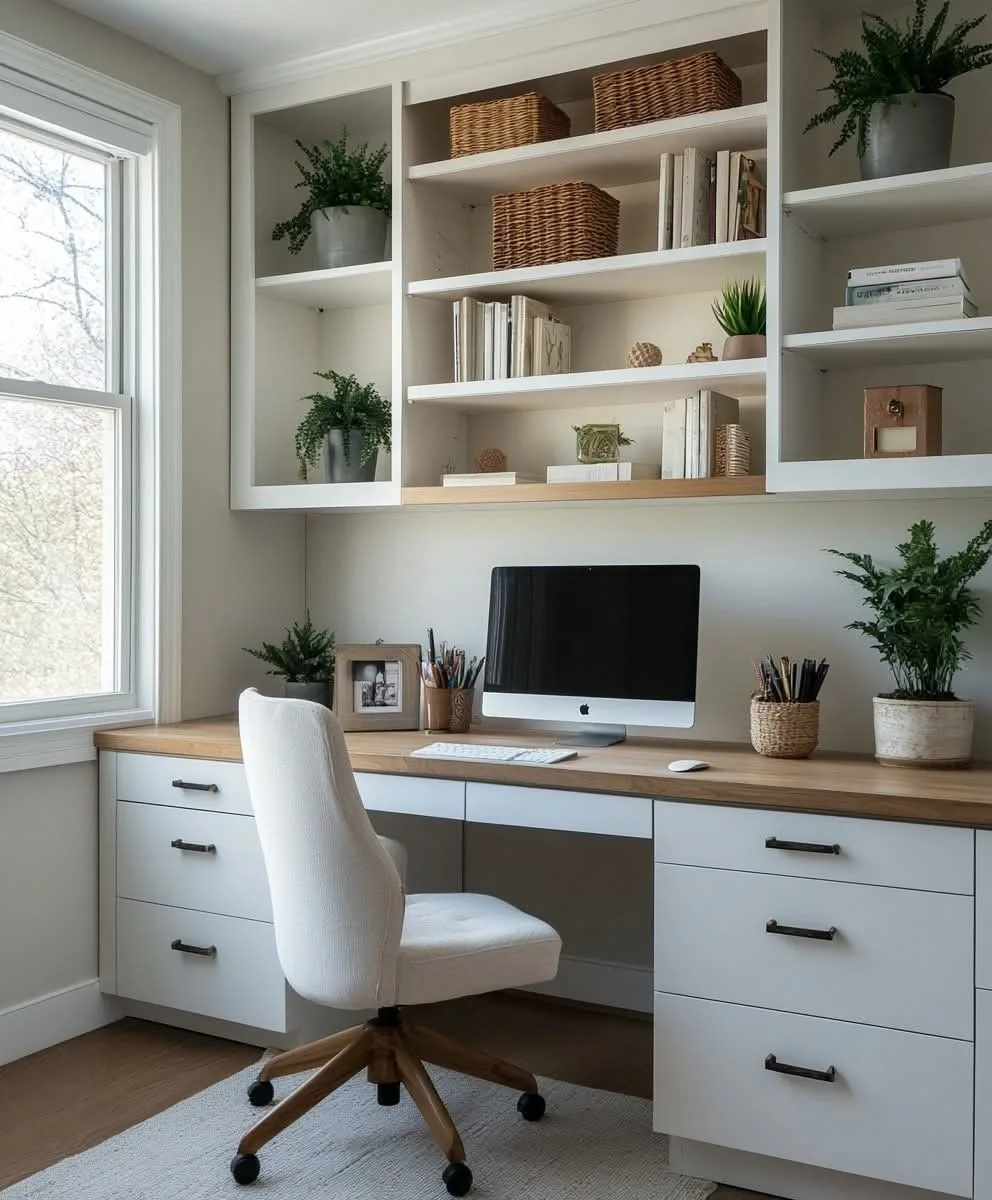
# Give work a clear boundary
A home office in a bedroom or living room should be easy to open and equally easy to close. Choose the smallest surface that fits your real work: laptop, notebook, and one necessary accessory. Extra depth often attracts unrelated piles.
## Position the essentials
Place the screen so glare is manageable and the top sits near eye level. Keep the keyboard and pointing device where elbows can rest comfortably. If the chair serves another purpose, add a removable support rather than storing a bulky second seat.
## Contain cables at the desk
Route power through one approved strip with enough capacity for the equipment. Secure loose cables under the back edge and label both ends. Keep cords away from heat, pinch points, and walkways; never cover adapters that need ventilation.
## Use one vertical rail
A pegboard or shallow shelf can hold headphones, a notebook, and a small file. Limit it to active work. Archive papers and backup supplies elsewhere so the visual field remains quiet.
## End with a three-minute shutdown
Save files, write tomorrow’s first task, return tools to their places, close the laptop, and remove cups. If the desk has doors or a cover, close it. Otherwise, an empty central surface is enough to signal that work is done.
The boundary matters more than the size. A compact setup that resets each evening helps the room return to rest, meals, or family time without requiring a second dedicated office.