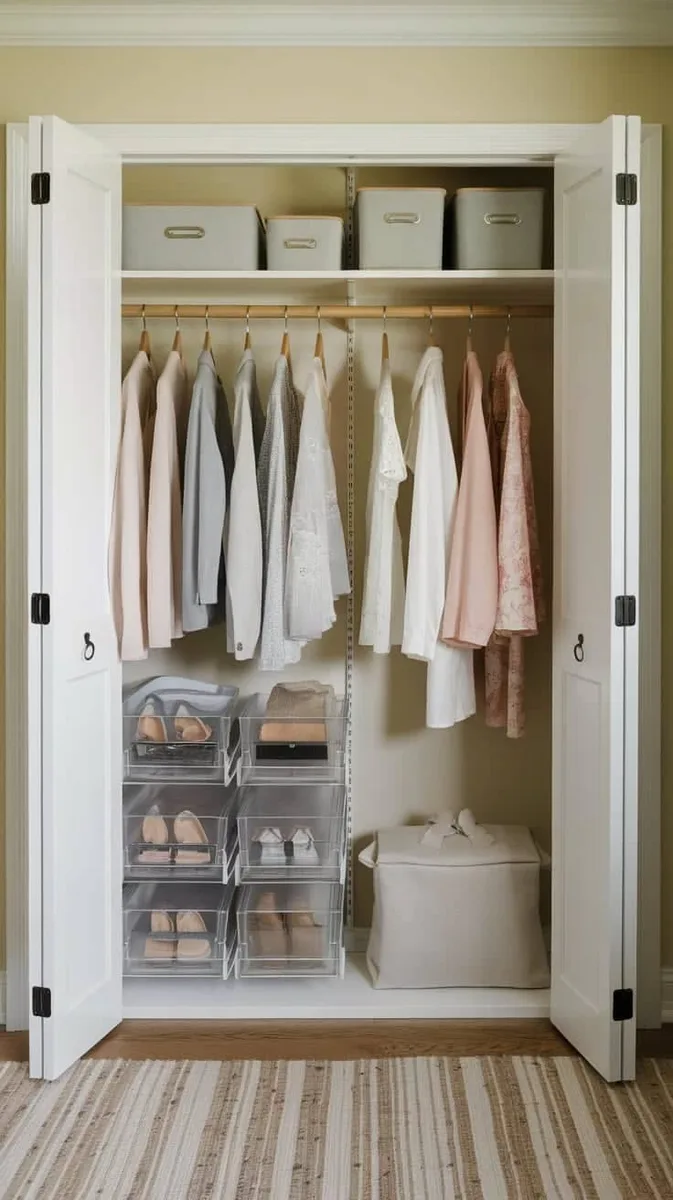
# Organize for the decisions you make
A small closet becomes easier when clothes that work together live together. Instead of sorting every piece by type, create compact outfit zones for work, casual days, exercise, and occasions. This reduces morning searching and exposes items that never fit your real routine.
## Edit before adding organizers
Remove everything and set aside pieces that do not fit, need repair, or have not been worn through a relevant season. Do not buy bins until the remaining volume is clear. Empty space is useful capacity, not a problem to fill.
## Set one hanger standard
Slim hangers create a cleaner line, but the important rule is quantity. Choose the number that fits without crushing garments. When no hanger is available, a new hanging item must replace an old one. Fold knits that stretch and place them on a reachable shelf.
## Use the floor for contained categories
A low bin can hold bags upright; a shoe rack should show every pair without double stacking. Keep the center floor clear so the back of the closet remains reachable. Store off-season clothes higher or elsewhere in a labeled container.
## Create a return point
Add one hook for clothes that are worn but not ready for laundry. Empty it weekly. This prevents the familiar chair pile from migrating back into the room.
The finished closet should make complete outfits visible, not display every possession. When access, limits, and return points are clear, the system stays usable even on rushed mornings.